Many students submit work they genuinely believe is solid, only to receive feedback citing plagiarism, AI misuse, poor referencing, or weak academic depth. What often goes wrong is not effort, but how sources are used and how arguments are presented.
Understanding a few key academic expectations can significantly improve both the quality of your work and your final grade.
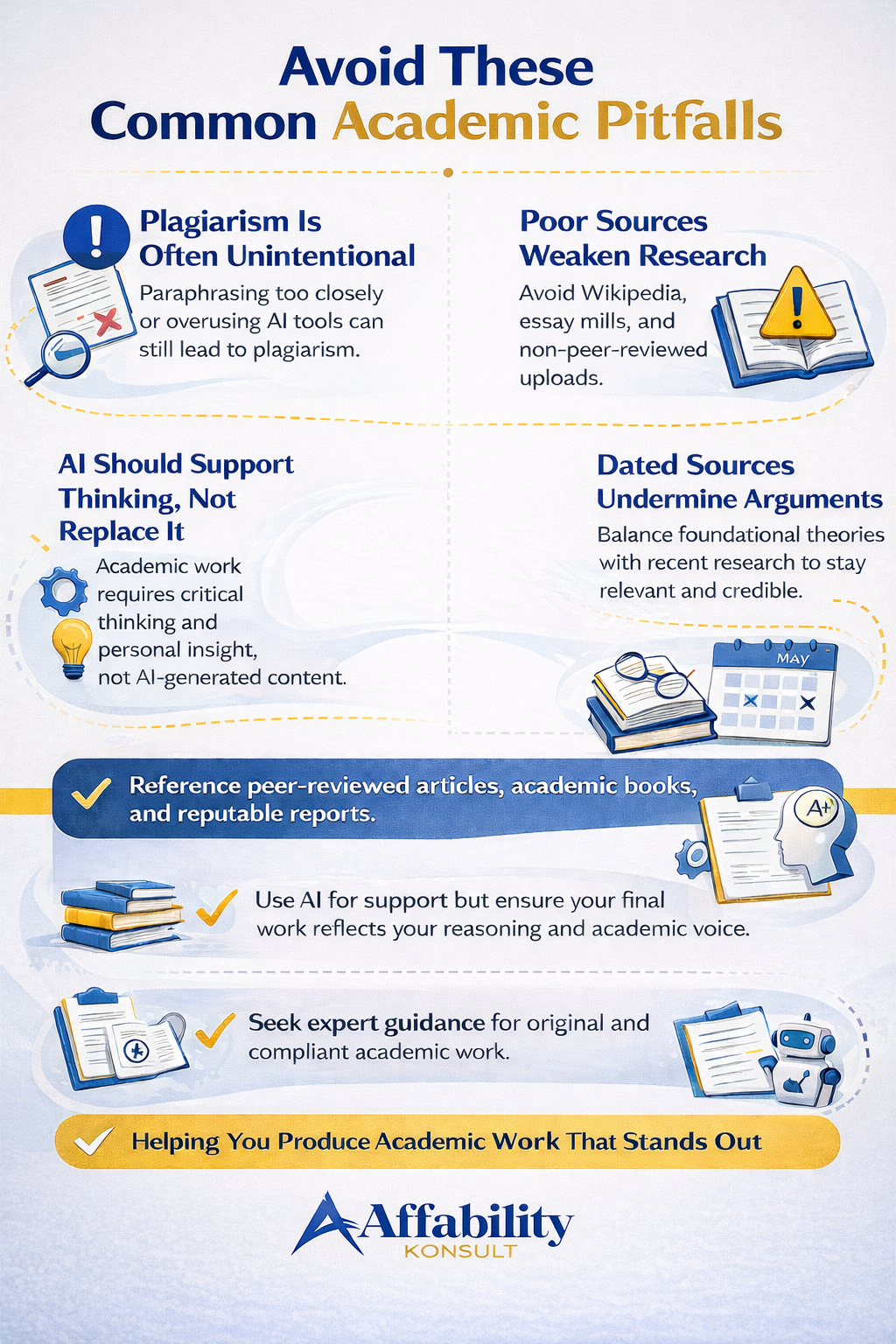
Plagiarism Is Often Unintentional
Plagiarism is not limited to copying text word for word. It also includes overly close paraphrasing, reproducing source structures, or submitting AI-generated content as original thinking. Even when citations are included, these practices can still raise academic integrity concerns.
A safer approach is to read widely, take notes in your own words, and then write independently before inserting citations. This ensures your voice remains clear and authentic.
AI Should Support Thinking, Not Replace It
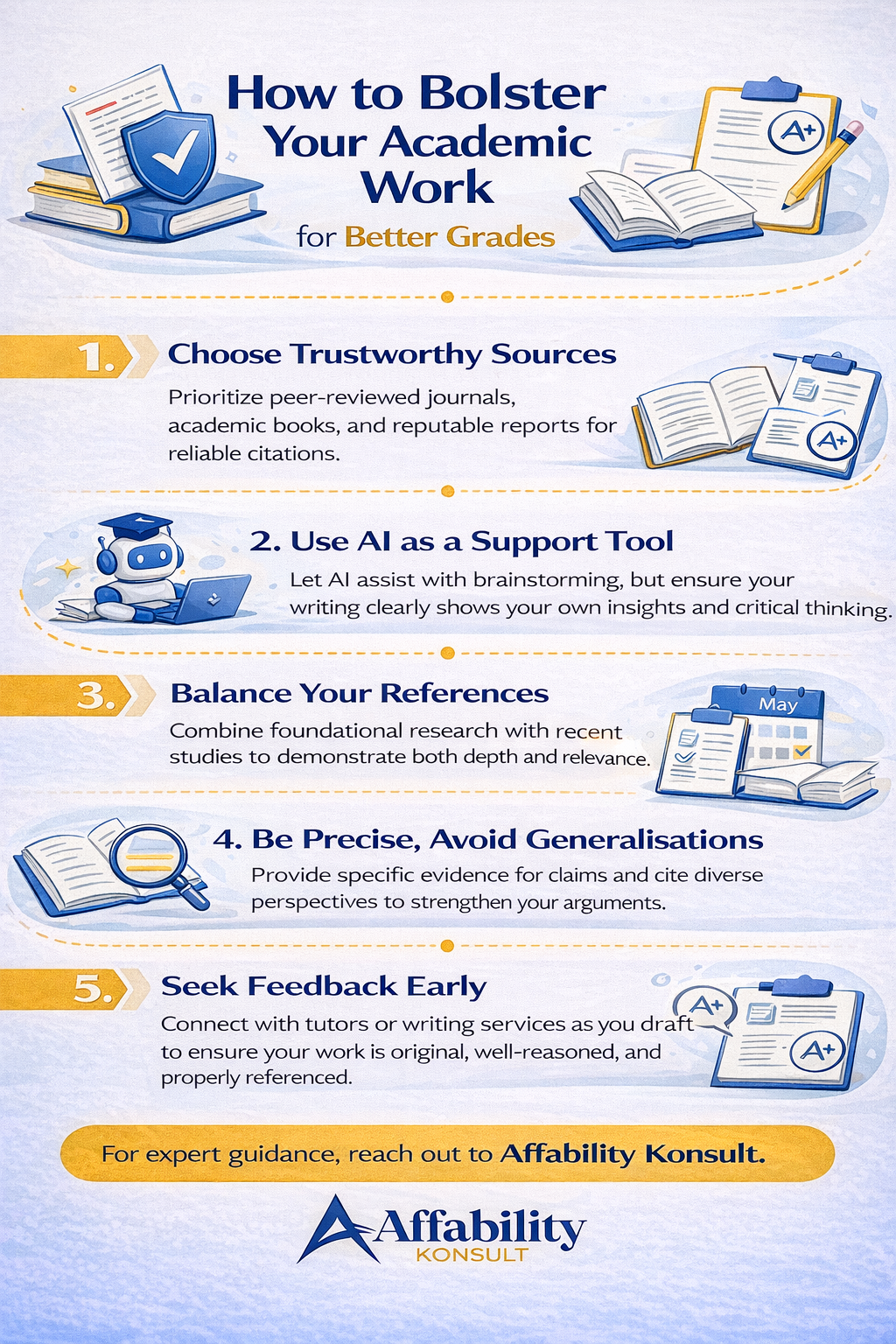
AI can assist with brainstorming, planning, and clarifying ideas, but it cannot replace critical thinking. One major weakness of AI-heavy writing is that it often lacks depth, specificity, and analytical judgement.
Academic work is assessed on understanding and evaluation, not surface-level fluency. If AI is used, the final submission must still reflect your reasoning, structure, and academic voice.
Referencing Is About Source Quality, Not Just Formatting
Referencing shows the academic strength of your work. Even when citations are correctly formatted, using inappropriate sources can significantly weaken your research.
Common sources students should avoid include:
Essay-writing websites such as UKEssays, CourseHero, Studocu
Open-edit encyclopaedias such as Wikipedia
Unreviewed uploads on platforms like ResearchGate unless the paper is also peer-reviewed elsewhere.
These sources may help with background understanding, but they are not suitable for citation in academic work.
Instead, prioritise:
peer-reviewed journal articles
academic books and textbooks
reputable institutional or governmental reports
Sweeping Statements Weaken Academic Writing
Phrases such as “researchers agree” or “it is widely known” sound confident but often lack evidence. Academic writing values precision and supported claims.
If a point is widely accepted, demonstrate this through citations. If perspectives differ, acknowledge the debate. Careful language strengthens credibility.
Dated Sources Can Undermine Strong Arguments
Using outdated literature can make your work appear disconnected from current research. While foundational texts such as core theories, models, and conceptual frameworks remain important, they should be supported by recent studies that show how those ideas are applied or challenged today.
In most disciplines, assessors expect a balance between:
foundational works (theories, models, frameworks)
current literature (usually within the last 5–10 years)
Thus, good research is not just about gathering information, it is about originality, credibility, and academic judgement. When these elements are missing, marks are lost even when effort is evident.