Introduction
A literature review is a core component of academic research, yet many students struggle to understand what is truly expected of them. One of the most common areas of confusion is the difference between a descriptive literature review and a critical literature review. While both involve reviewing existing research, they serve different academic purposes and are assessed using different criteria.
Understanding these differences is essential for producing high-quality academic work and meeting lecturers' expectations, particularly at undergraduate and postgraduate levels.
What Is a Descriptive Literature Review?
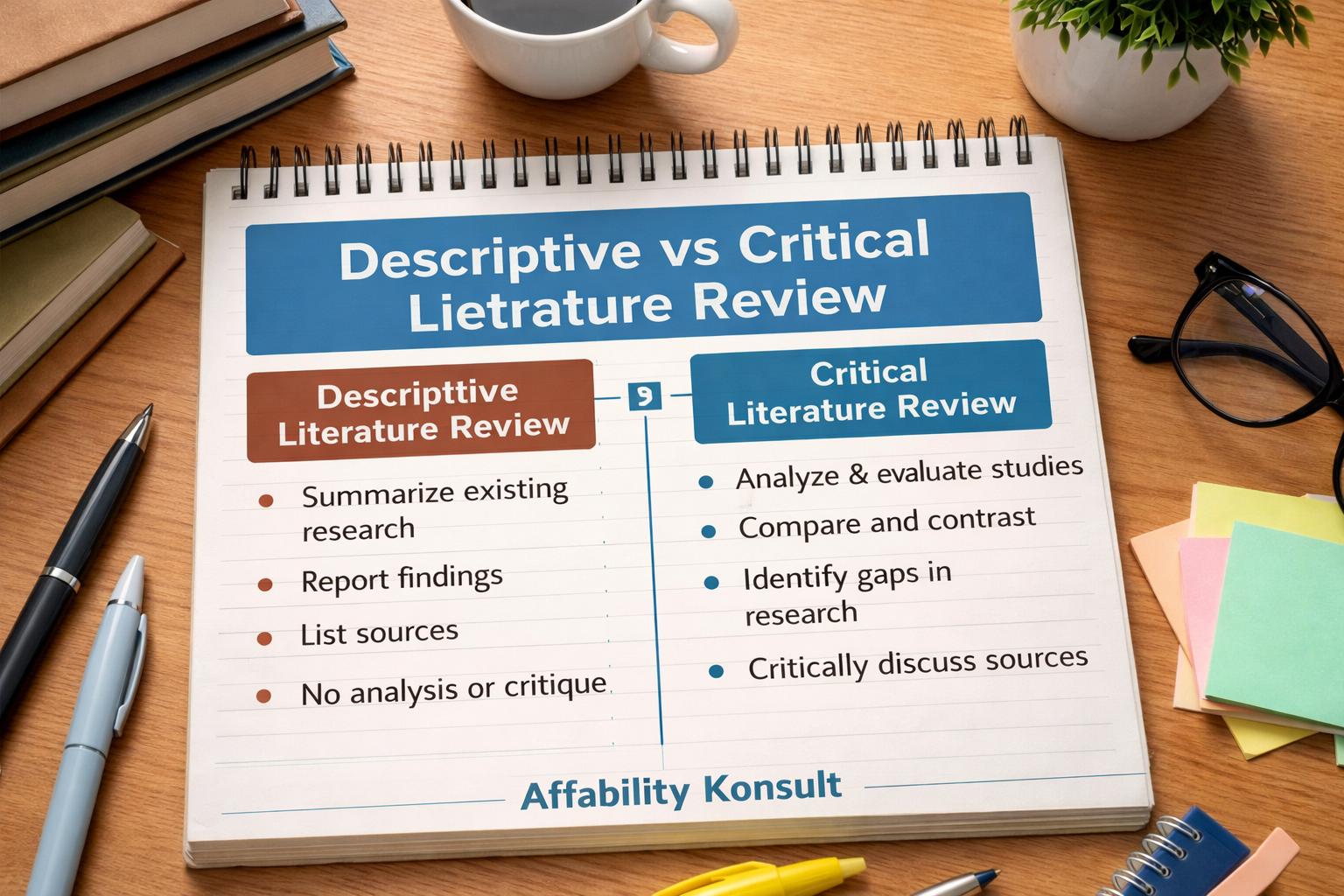
A descriptive literature review focuses on summarising existing research related to a particular topic. Its primary purpose is to demonstrate that the writer understands the key ideas, theories, and findings within the field.
In a descriptive literature review, the writer typically:
-Summarises major studies and authors
-Describes research methods used
-Reports findings without evaluation
-Organises literature chronologically or thematically
At this stage, sources are generally presented at face value, with minimal critique. The emphasis is on what the literature says rather than how effective or reliable the research is.
Descriptive literature reviews are most common at Level 3 and early undergraduate stages, where students are still developing analytical skills.
Students at this level often benefit from structured support.
Explore our Level 3 academic writing support services to build strong foundations.
What Is a Critical Literature Review?
A critical literature review goes beyond description and summary. It involves analysis, evaluation, and synthesis of existing research to demonstrate academic judgement.
In a critical literature review, the writer:
-Evaluates the strengths and weaknesses of studies
-Compares differing viewpoints
-Identifies gaps or inconsistencies in the literature
-Assesses the relevance and credibility of research methods
-Links literature directly to the research question
Rather than simply reporting what others have written, the writer actively engages with the literature and positions their research within the wider academic debate.
Critical literature reviews are expected at advanced undergraduate, postgraduate, and professional research levels.
Why a Critical Literature Review Is Often Required
At university level, lecturers and examiners expect students to show critical thinking skills. A critical literature review demonstrates the ability to:
-Evaluate the quality of academic sources
-Justify research choices
-Identify research gaps
-Support original arguments
Assignments that remain purely descriptive often receive lower grades, regardless of how well-written they are.
How to Move from Descriptive to Critical Writing
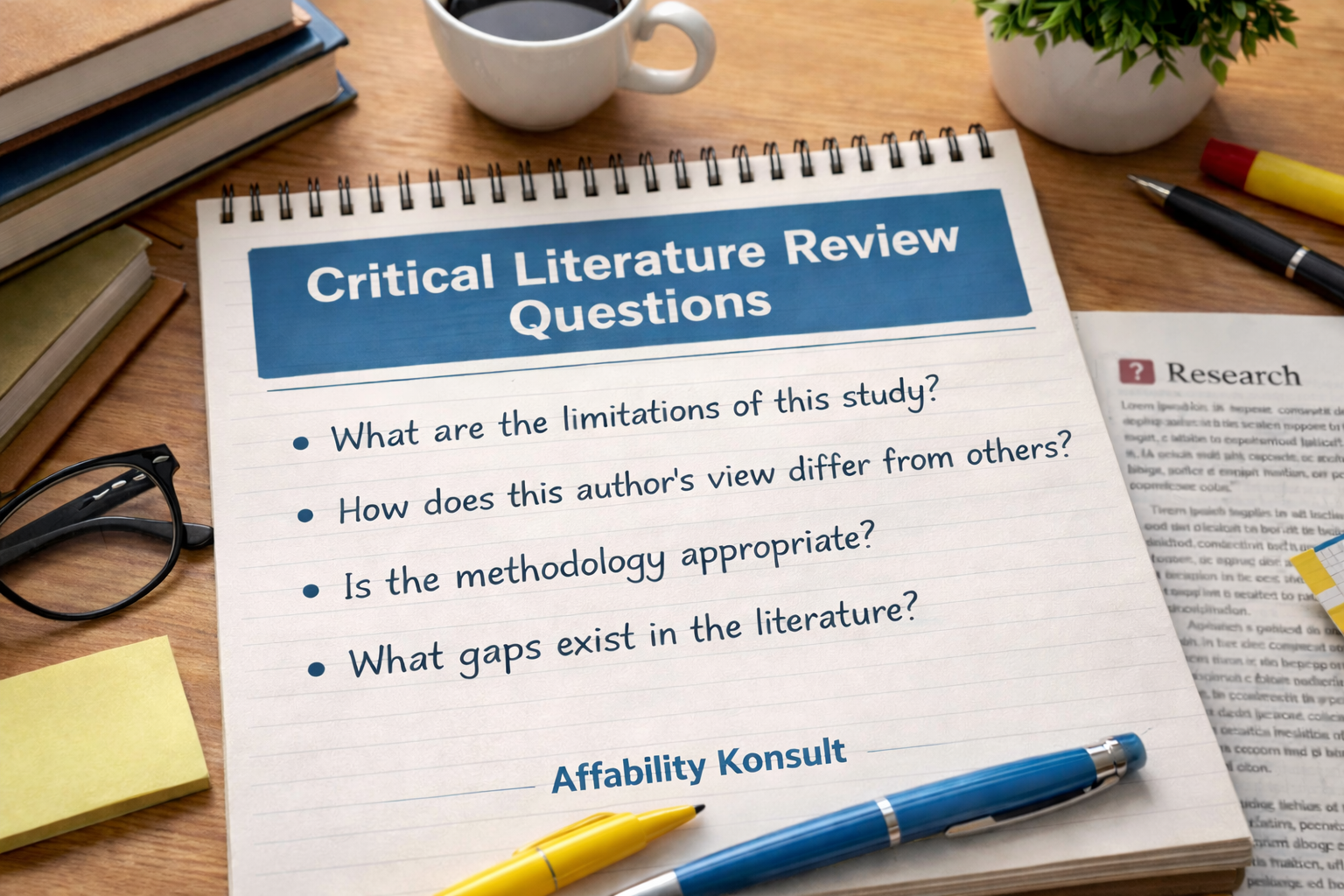
Many students begin by describing the literature before developing critical depth. To strengthen your literature review, consider asking:
-What are the limitations of this study?
-How does this author’s argument compare with others?
-Is the research method appropriate?
-How relevant is this study to my research question?
-What gaps exist in the literature?
Using analytical language such as however, this suggests, a limitation of this study is, and in contrast helps signal critical engagement.
Conclusion
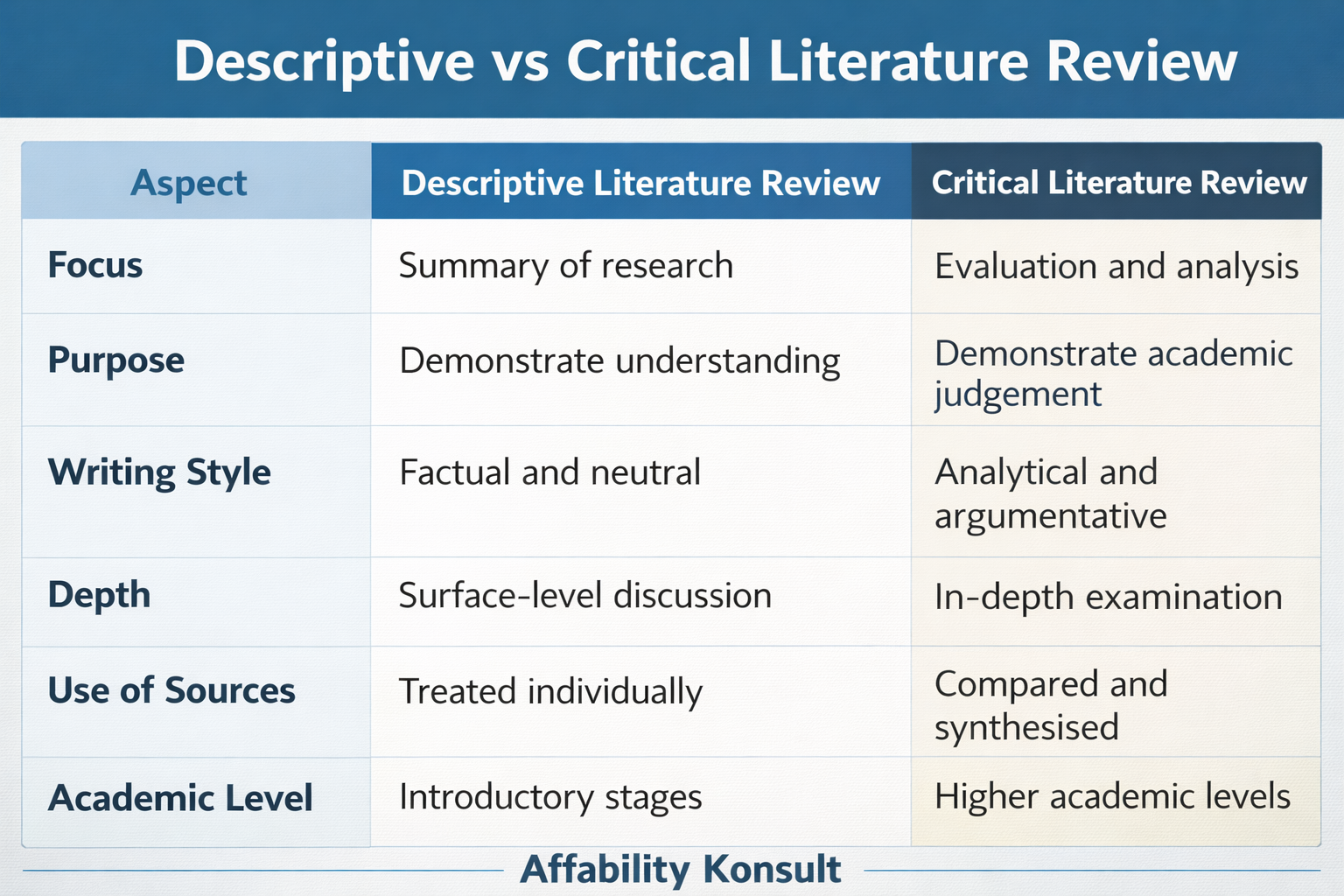
A descriptive literature review summarises existing research, while a critical literature review evaluates, compares, and interprets it. Understanding this distinction is essential for meeting academic expectations and achieving strong academic outcomes.
Developing critical analysis skills allows students to produce credible, well-argued research and progress confidently through higher levels of study.
About This Guide
This article is based on established academic writing standards and best practices, and reflects Affability Konsult’s commitment to clear, ethical, and high-quality academic support.