
Why Sampling Decisions Can Make or Break Your Research
One of the most common reasons students lose marks in research projects is not poor grammar or weak writing, but poor methodological decisions. A key area where this happens is sampling.
Many students treat sampling as something they must “just include” under the Methodology chapter. However, sampling is far more than a formality. It directly affects whether your research findings are credible, trustworthy, and acceptable to examiners.
If your sample is poorly chosen or badly justified, even a well-written project can lose significant marks.
In this article, we will break down:
What sample and sampling actually mean
How to choose an appropriate sample and sampling method
How to justify your choice in simple academic terms
Common mistakes students make and how to avoid them
What Does “Sample” Mean in Research?
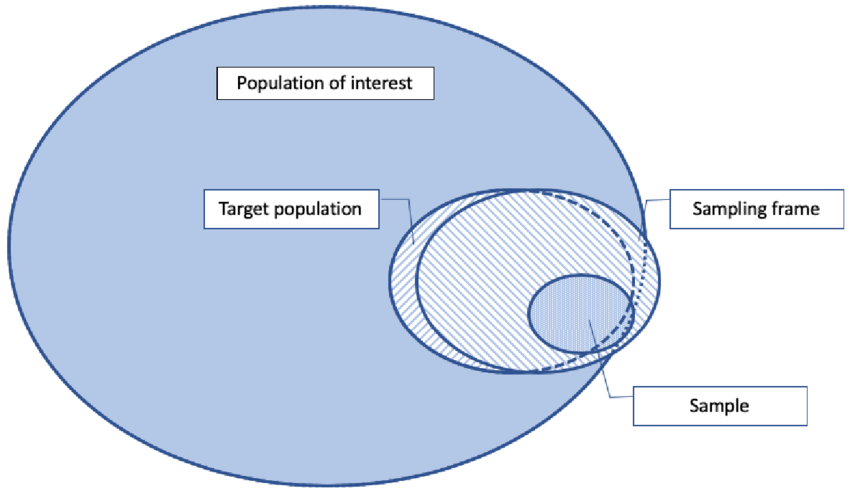
In research, a population refers to the entire group you are interested in studying. For example:
All undergraduate students in a university
All secondary school teachers in Lagos State
All small business owners in a particular industry
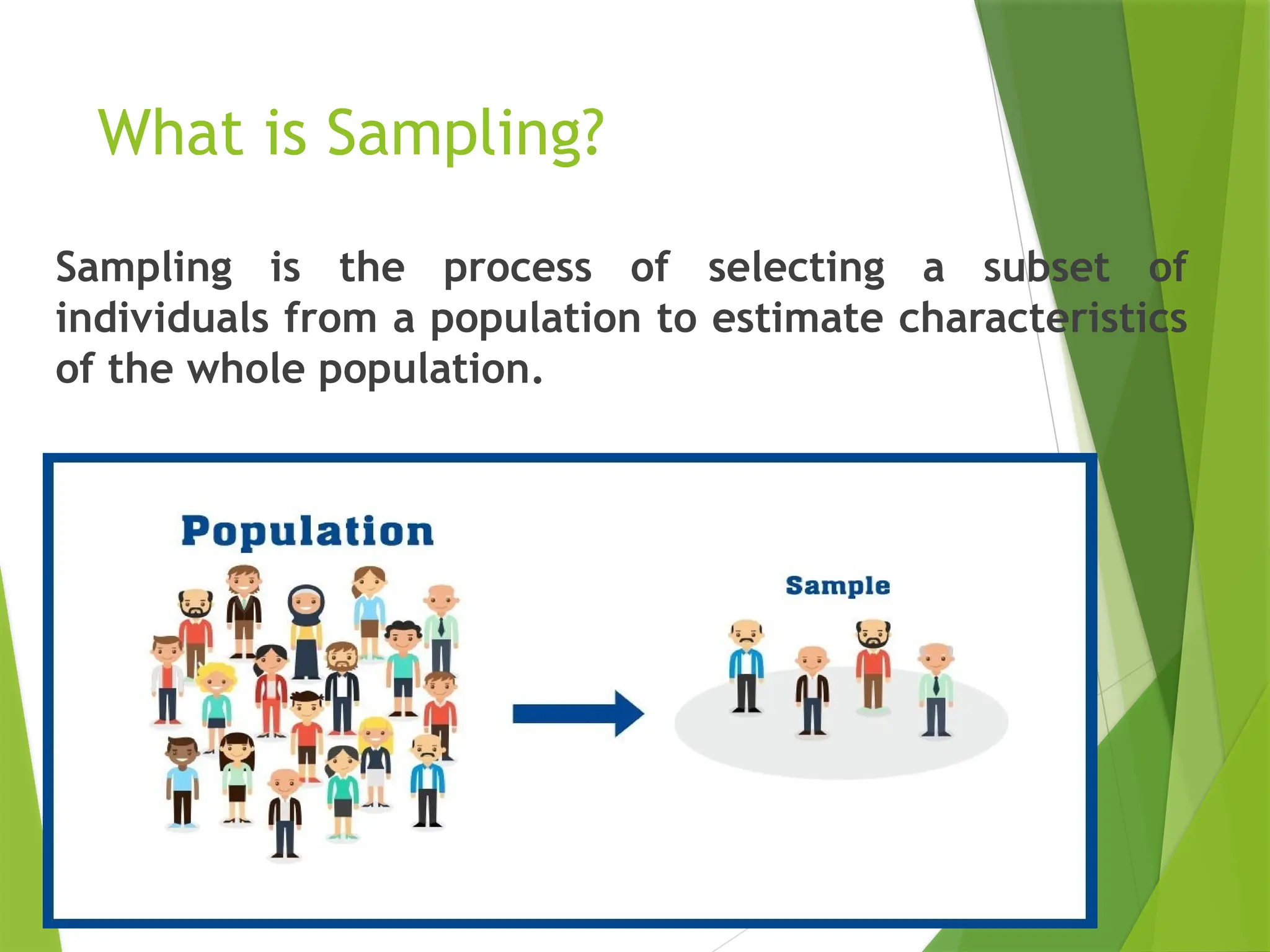
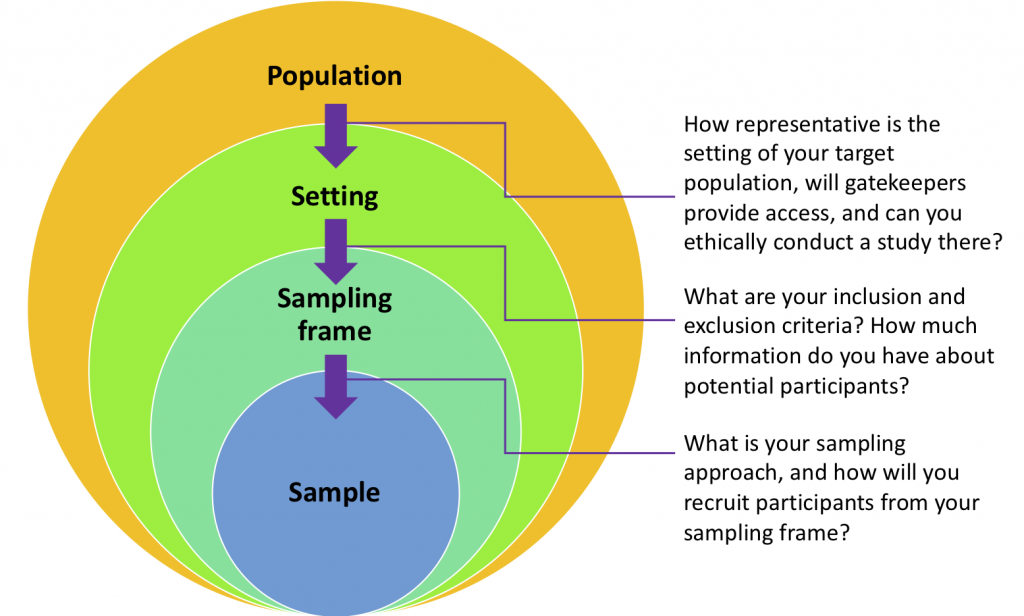
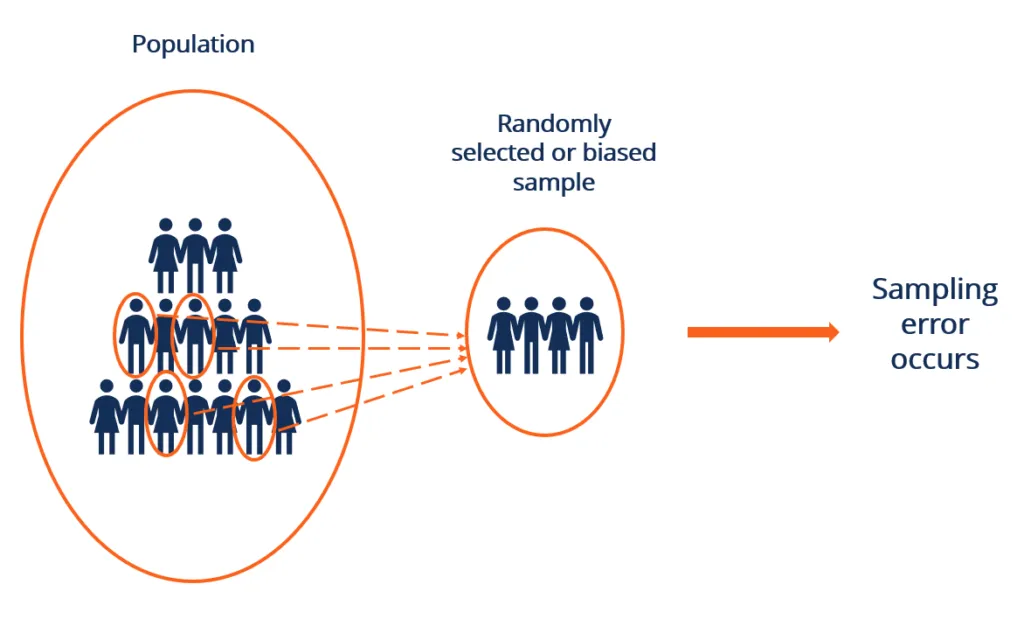
Studying the entire population is often impractical, expensive, or impossible. This is where a sample comes in.
A sample is a smaller group selected from the population that is studied in place of the whole population. Researchers then use the findings from the sample to draw conclusions about the population.
In simple terms:
A sample is who you actually collect data from.
What Makes a Good Sample?
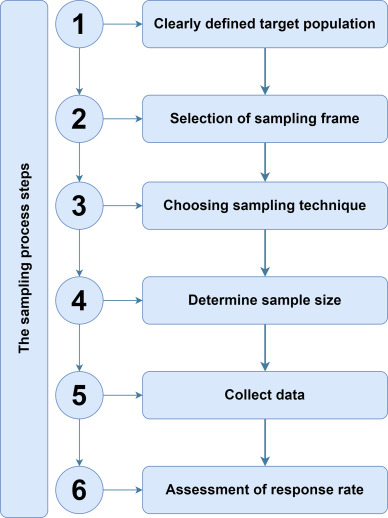
A good sample is not defined by size alone. It must be:
Relevant to the research question
(The people selected must actually relate to what you are studying.)Sufficient in size
(Large enough to produce meaningful data, given your research design.)Appropriately selected
(Chosen using a method that suits the study.)Justified in relation to the study design
(Clearly explained and defended in your Methodology chapter.)
Key rule:
Your sample must serve the purpose of the research, not your convenience.
Understanding Sampling Methods
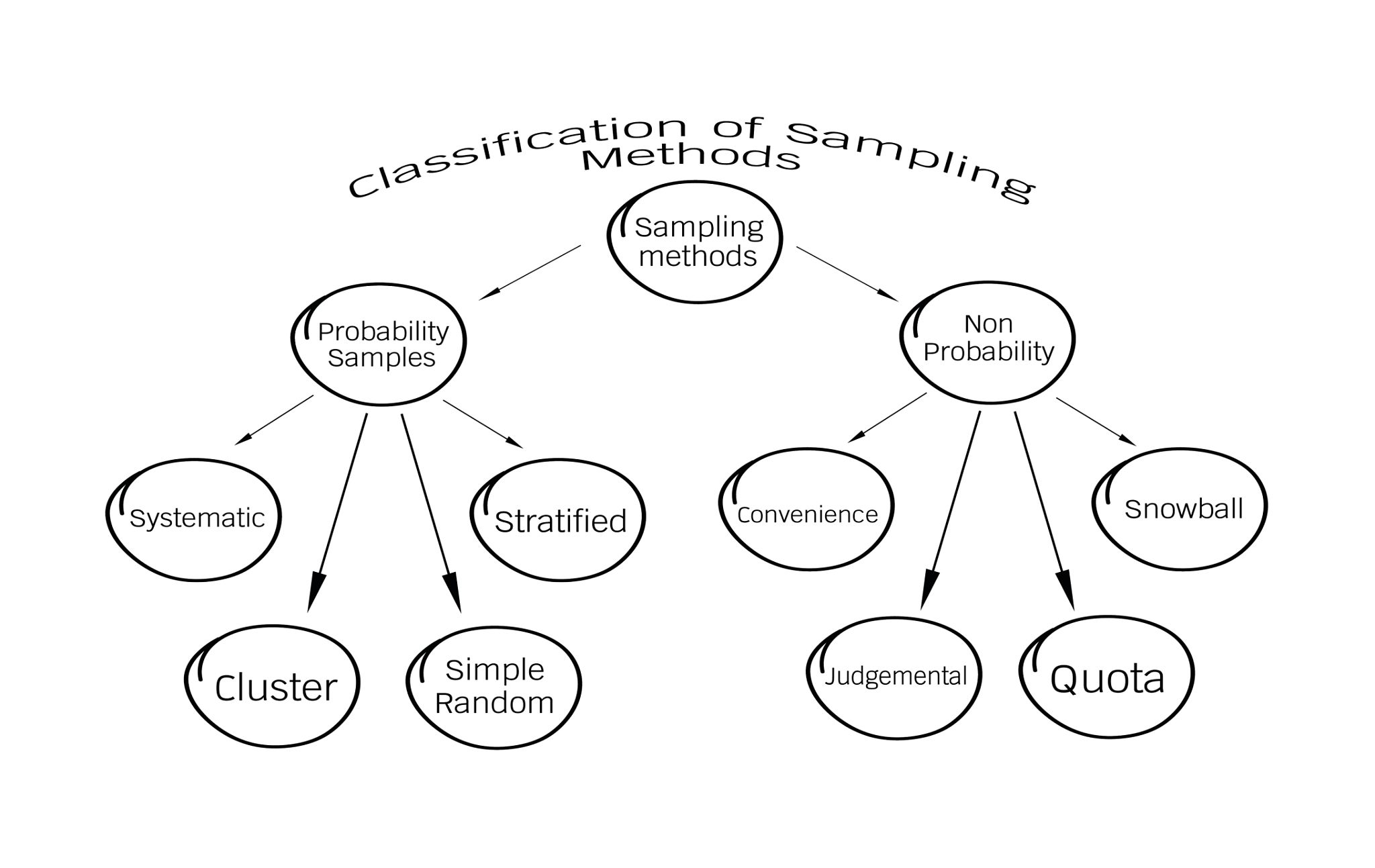
A sampling method is the process or technique used to select participants from the population.
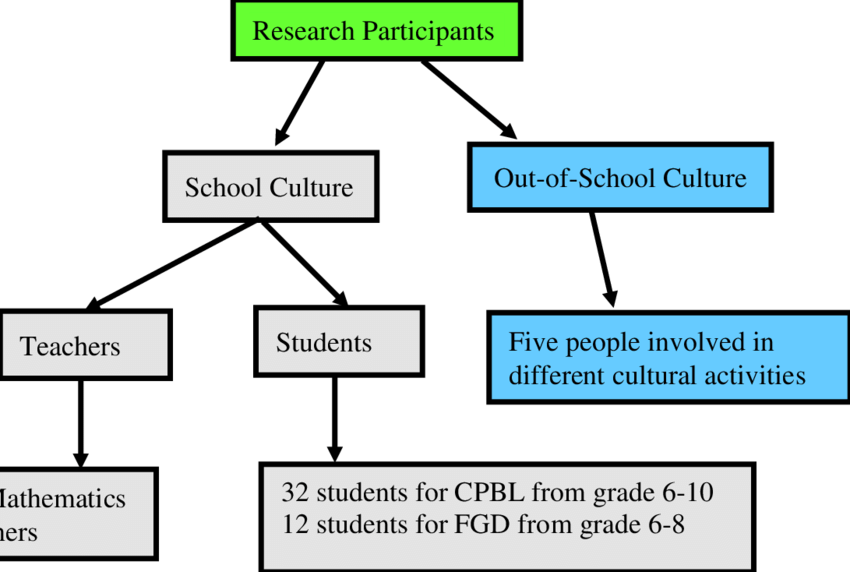
Sampling methods are broadly divided into two categories:
Probability sampling
Non-probability sampling
Which one you use depends on:
Your research aim
Whether your study is quantitative or qualitative
Whether you need to generalise your findings
Probability Sampling Methods
(When Representativeness Matters)
Probability sampling methods are designed to ensure that every member of the population has a known and equal (or calculable) chance of being selected.
These methods are most suitable for quantitative research, where the goal is to generalise findings to a wider population.
1. Simple Random Sampling
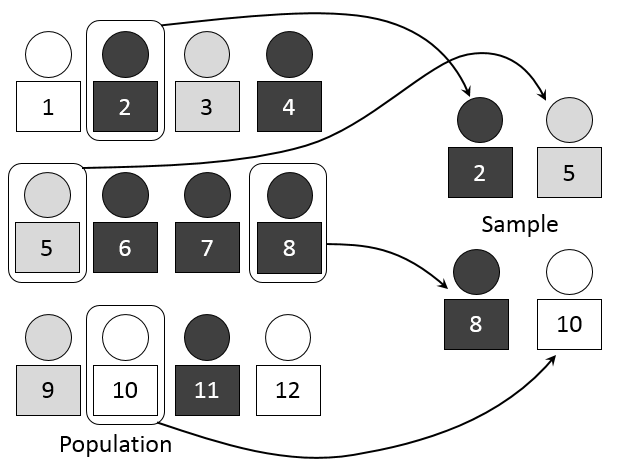
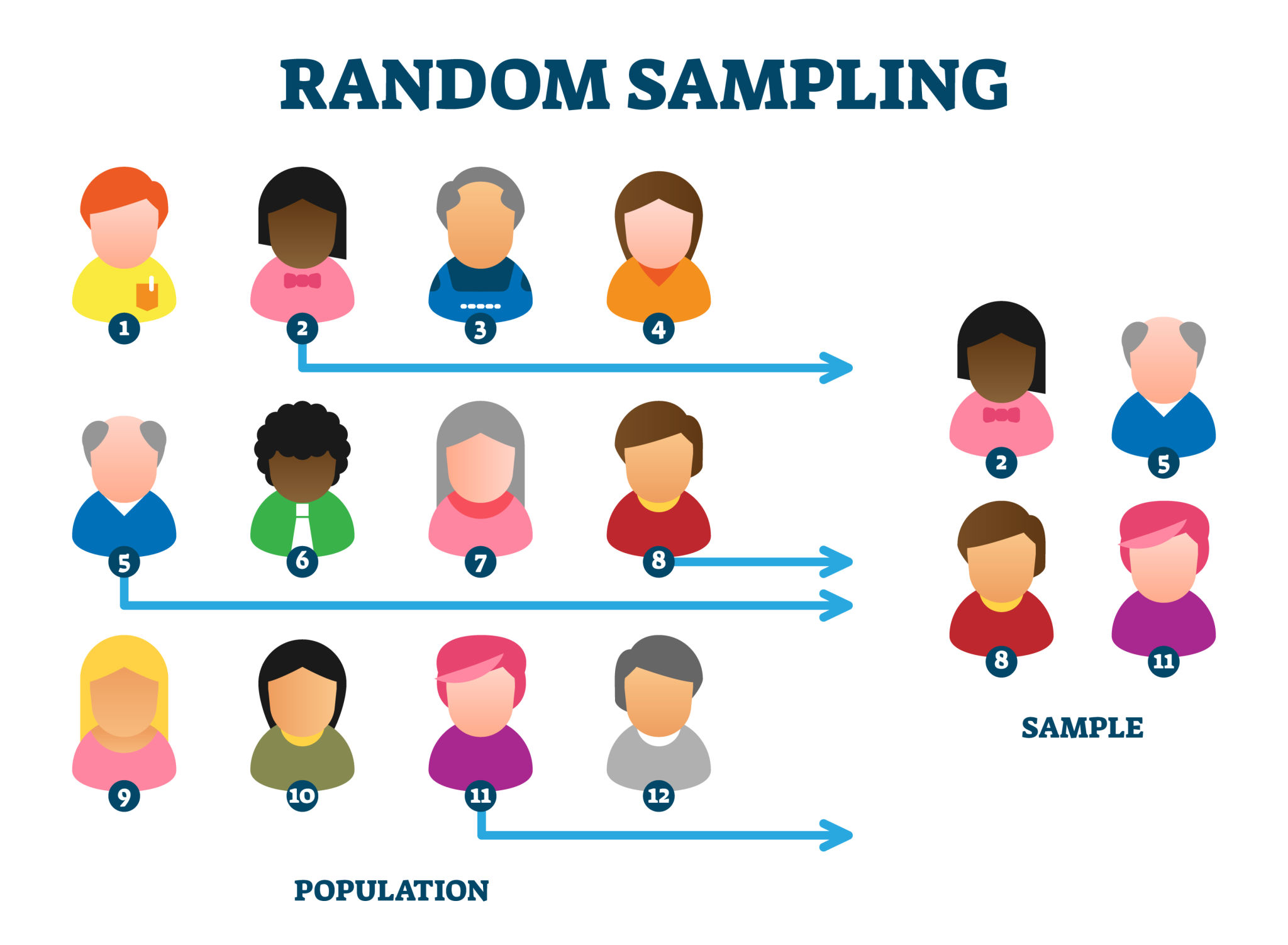
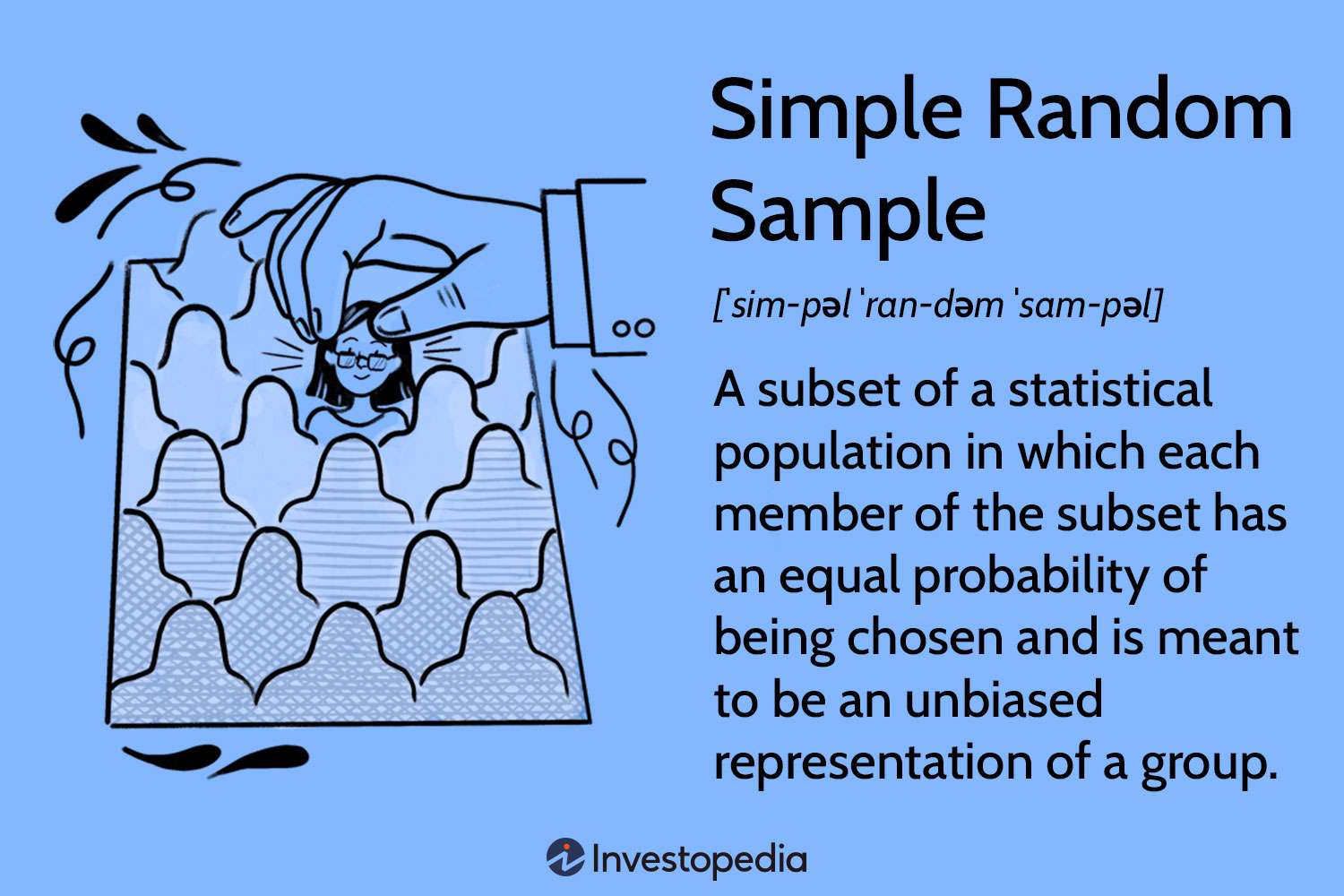
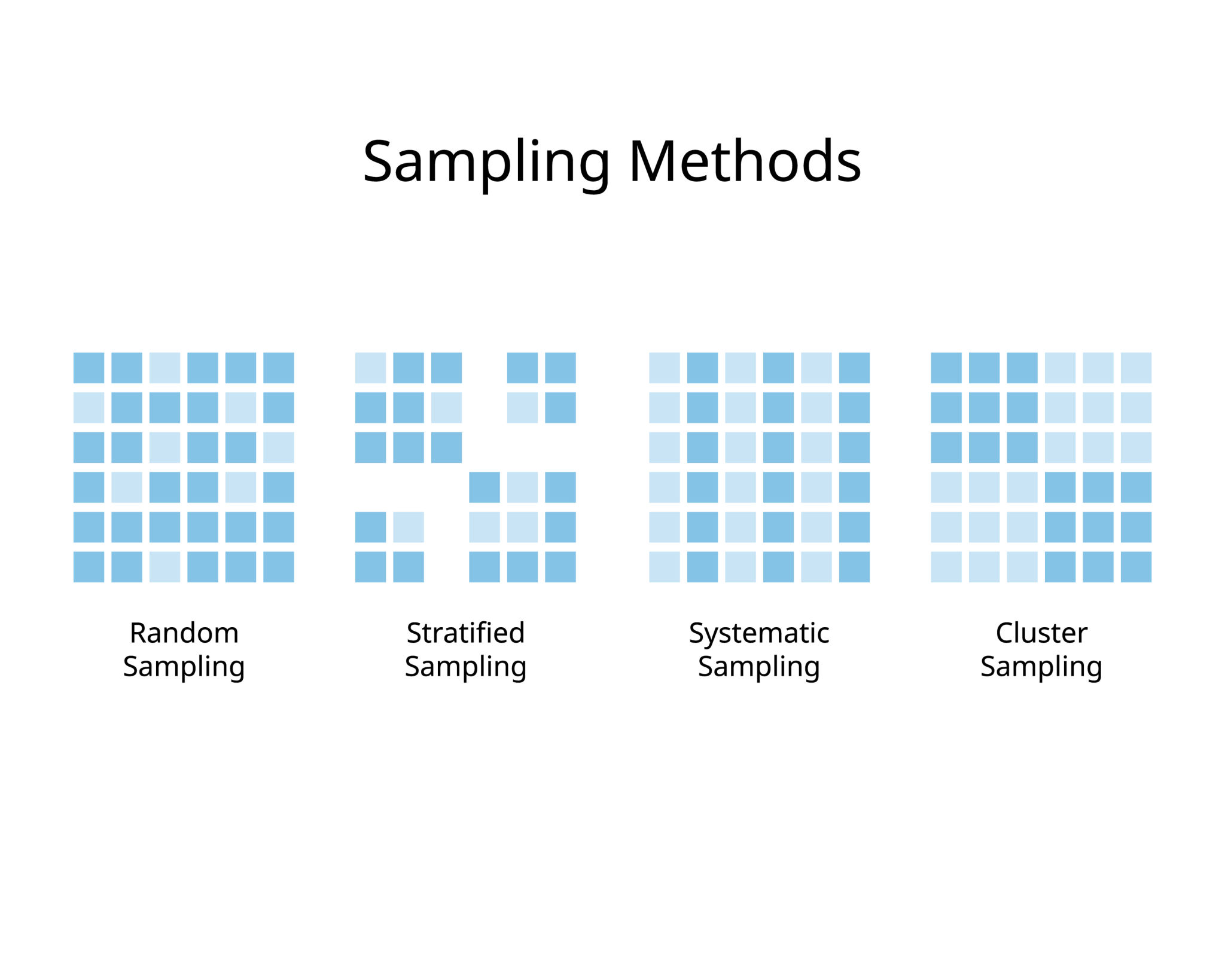
In simple random sampling, every individual in the population has an equal chance of being selected, just like drawing names from a hat.
Appropriate when:
You have a complete list of the population (a sampling frame)
The population is relatively similar (homogeneous)
Do:
✔ Use random number tables or software
✔ Clearly explain how randomness was achieved
Don’t:
✘ Select participants based on who is easiest to reach
2. Stratified Sampling
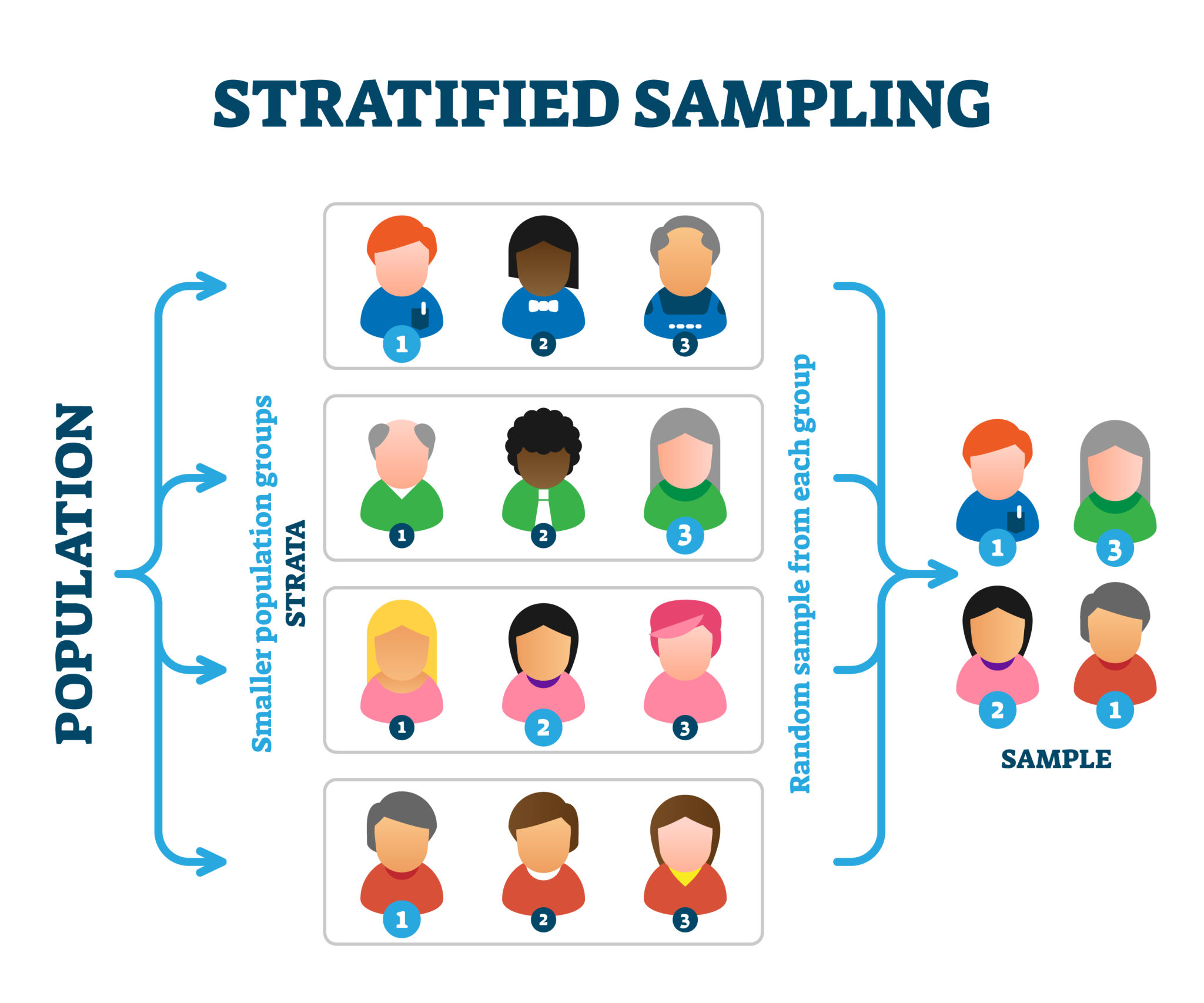
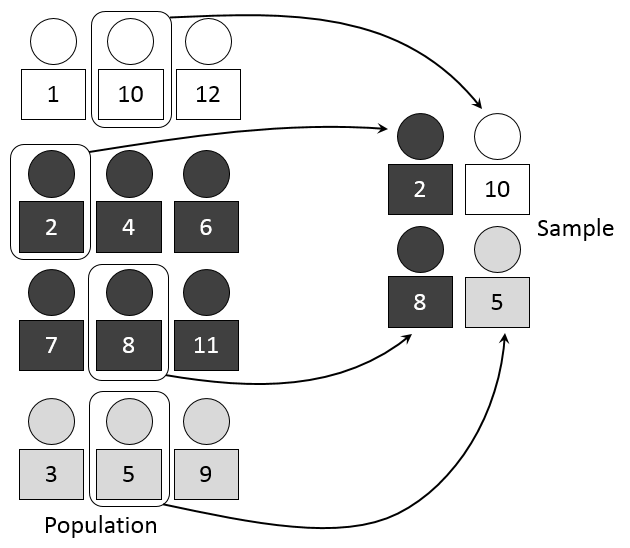
In stratified sampling, the population is first divided into subgroups (called strata) based on shared characteristics such as gender, department, or age. Samples are then drawn proportionally from each subgroup.
Why this matters:
It ensures that important groups are not underrepresented.
Appropriate when:
Representation across key categories is important
Do:
✔ Explain why the strata were chosen
✔ Maintain proportional balance
Don’t:
✘ Combine unequal groups without justification
3. Cluster Sampling
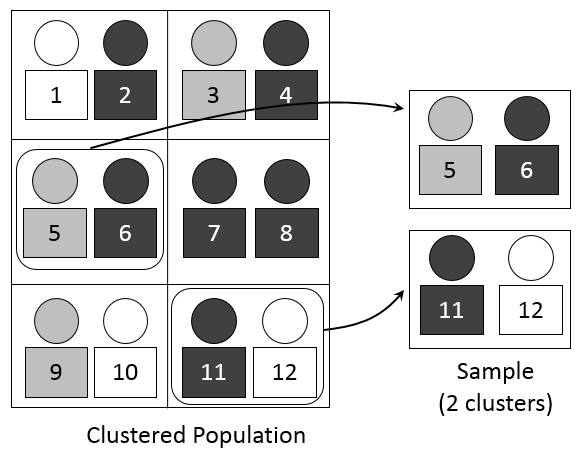
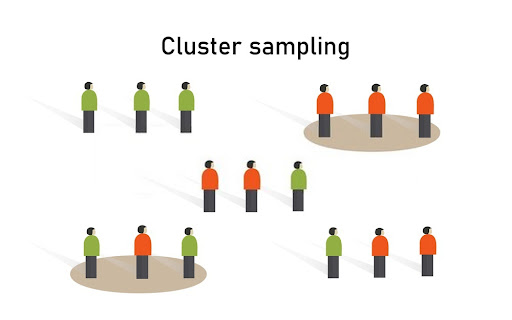
Cluster sampling involves dividing the population into groups or clusters (for example, schools or communities) and randomly selecting entire clusters for study.
Appropriate when:
The population is large and geographically dispersed
A full list of individuals is unavailable
Do:
✔ Clearly define what constitutes a cluster
✔ Acknowledge reduced precision
Don’t:
✘ Treat clusters as individual respondents
Non-Probability Sampling Methods
(When Depth Matters More Than Generalisation)
Non-probability sampling methods do not give every population member an equal chance of selection. Instead, participants are selected based on access, relevance, or experience.
These methods are common in:
Qualitative research
Exploratory studies
Postgraduate research with access constraints
1. Convenience Sampling
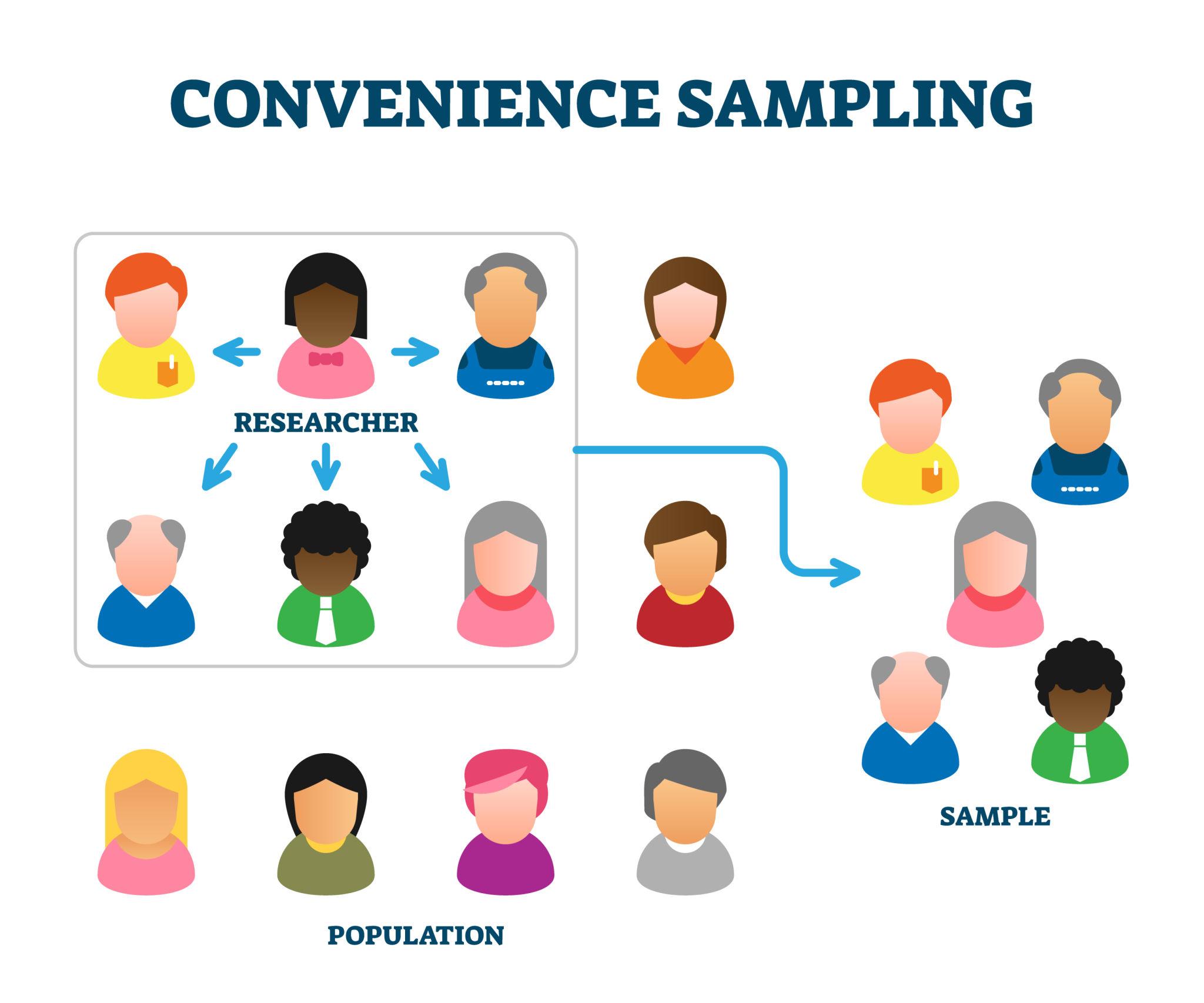
Convenience sampling involves selecting participants who are easiest to access.
Appropriate when:
The study is exploratory
Time, access, or resources are limited
⚠ Important clarification:
Convenience sampling does NOT mean sending questionnaires to:
Family members
Friends
WhatsApp contacts
Social media followers
…unless you can clearly justify why they are appropriate for the study.
Do:
✔ Explain access limitations
✔ Acknowledge lack of representativeness
Don’t:
✘ Use personal relationships as your sampling frame
✘ Claim generalisability
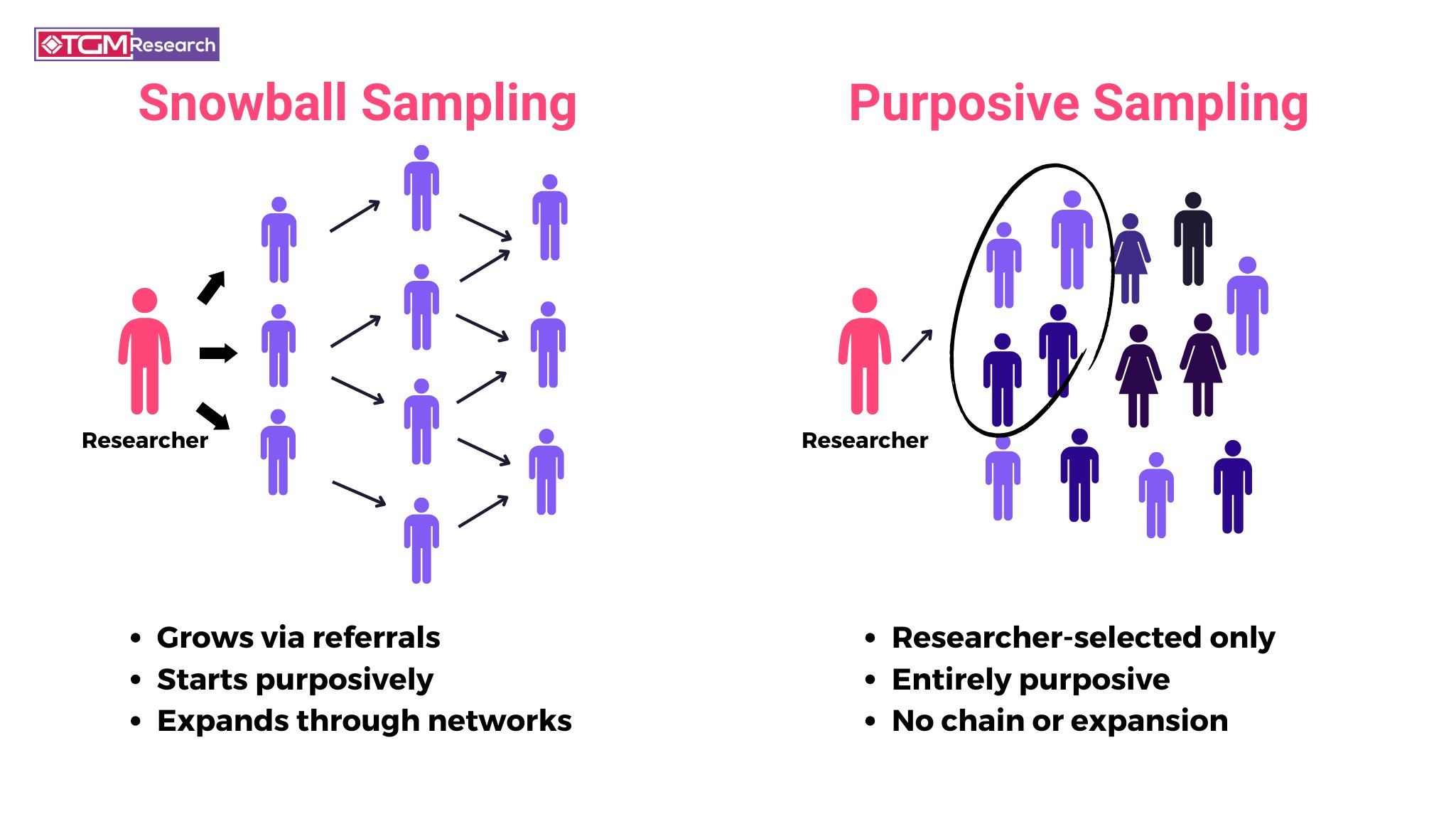
2. Purposive Sampling
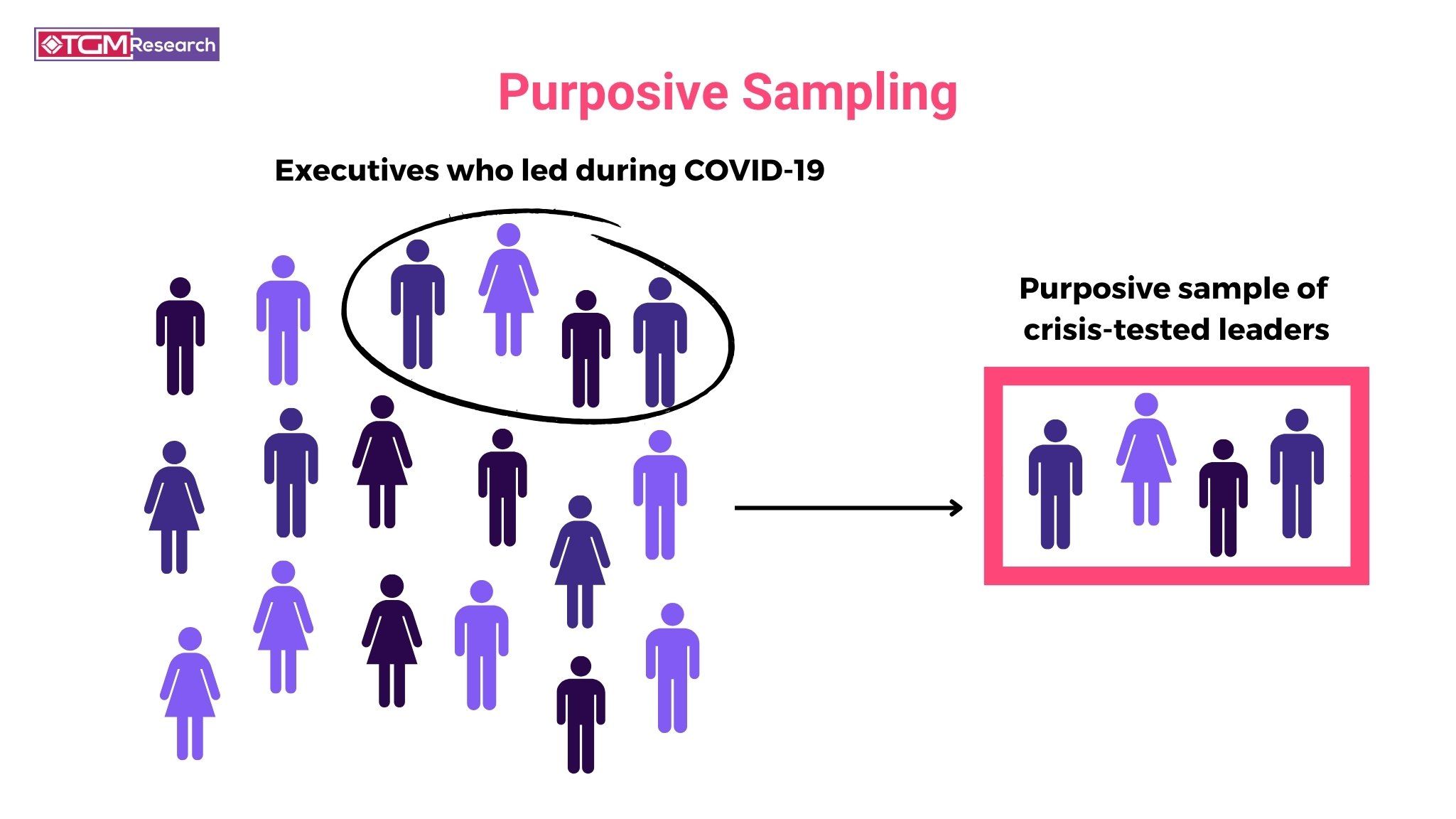
Purposive sampling involves intentionally selecting participants because they possess specific knowledge, experience, or characteristics relevant to the research.
Appropriate when:
The study requires expertise or lived experience
The research is qualitative
Do:
✔ Define clear inclusion criteria
✔ Link participant selection to research objectives
Don’t:
✘ Be vague about selection reasons
3. Snowball Sampling
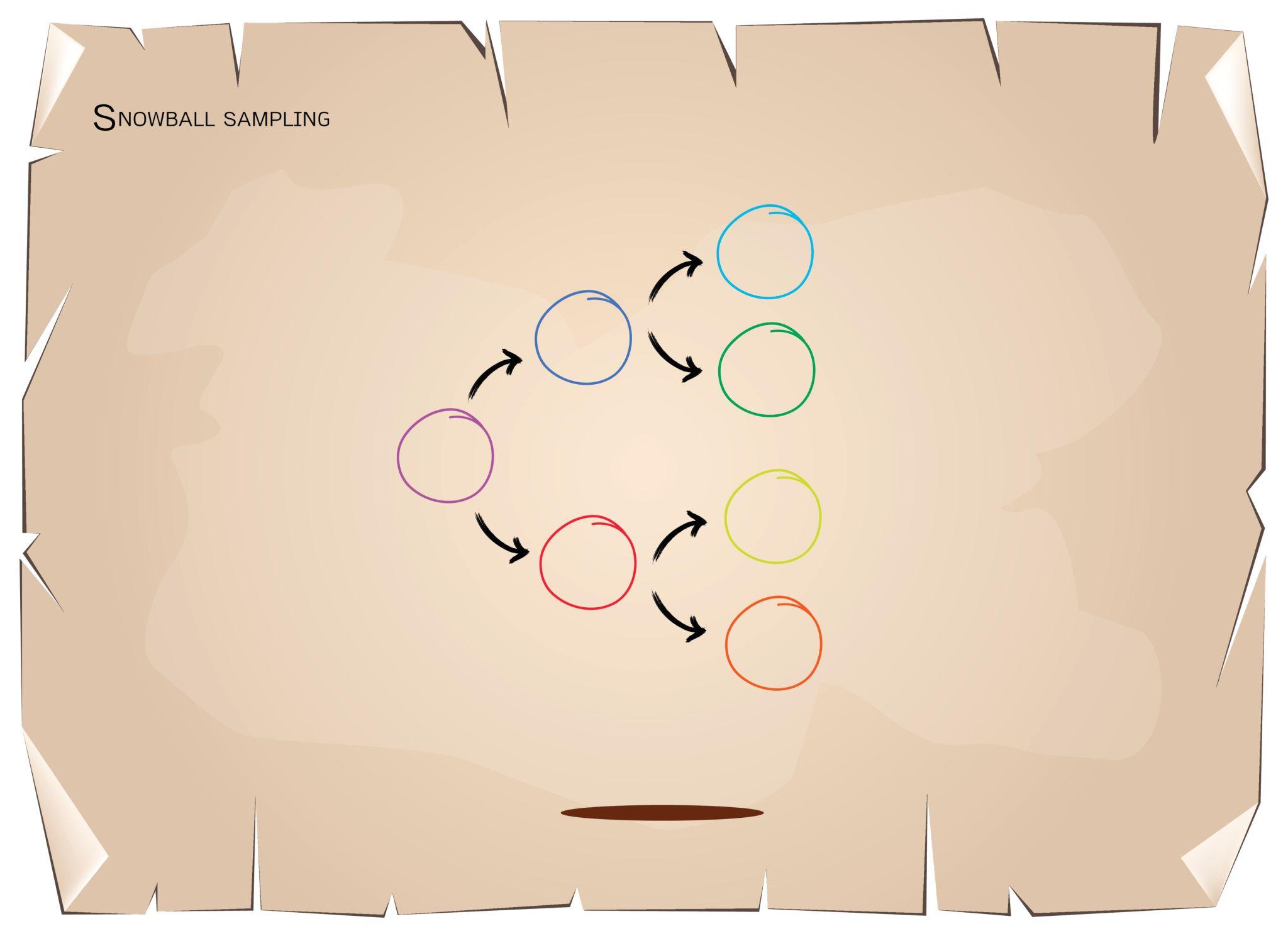
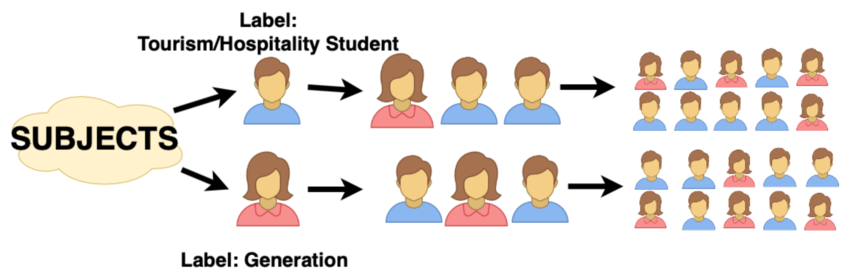
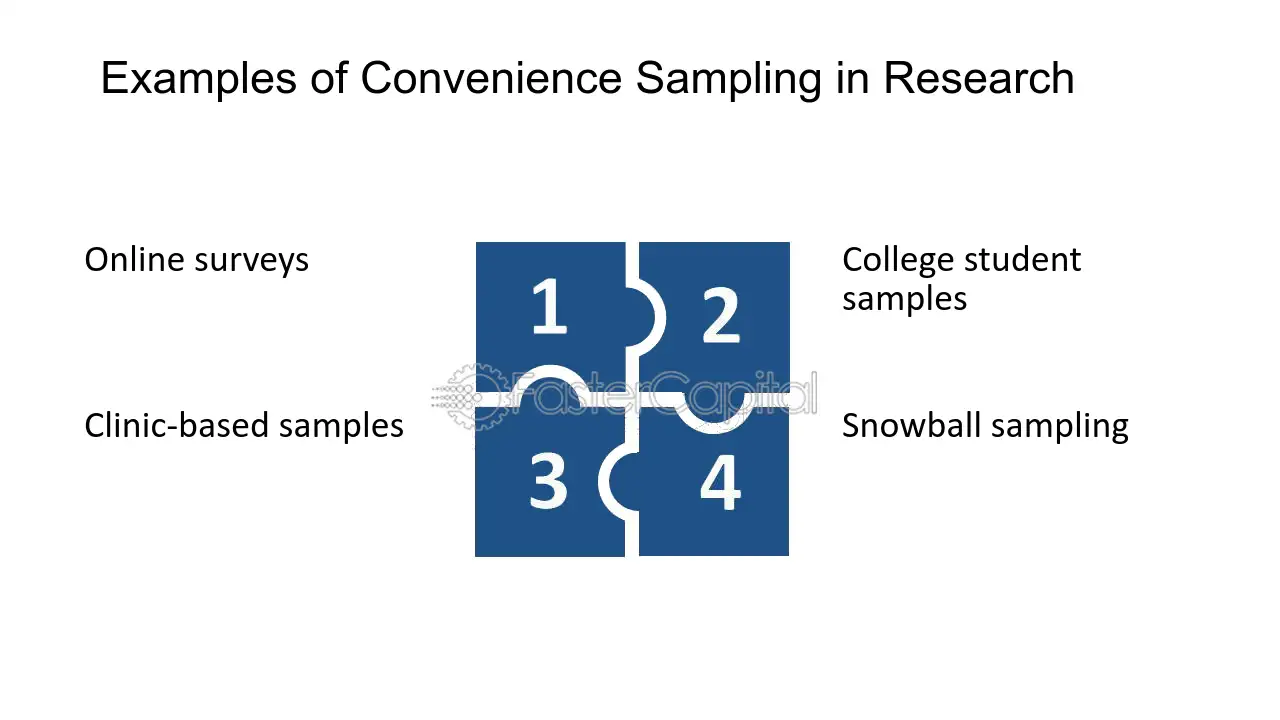
In snowball sampling, existing participants help identify or recruit other participants.
Appropriate when:
The population is hard to reach
Direct access is difficult
Do:
✔ Explain access challenges
✔ Control bias as much as possible
Don’t:
✘ Overstate generalisability
How to Justify the Appropriateness of Your Sampling Method
Markers are not looking for a perfect sampling method.
They are looking for a logical and well-explained choice.
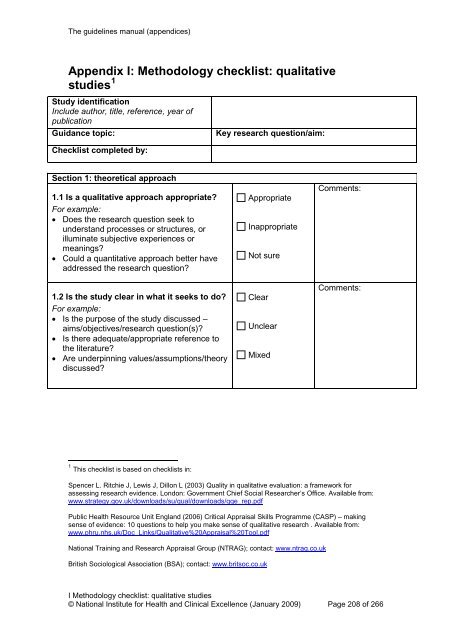
Your justification should clearly explain:
Why the method suits the research aim
Why other methods were unsuitable
How limitations were addressed
Example justification:
Purposive sampling was adopted to ensure participants possessed direct experience relevant to the research objectives, making it suitable for this qualitative inquiry.
Remember to always back up your justification with in-text citations
Common Sampling Mistakes to Avoid
❌ Treating convenience sampling as random sampling
❌ Using “time constraints” as the only justification
❌ Claiming generalisability when using non-probability sampling
❌ Ignoring ethical and access issues
❌ Mismatch between research design and sampling method
Sampling Is a Methodological Argument
Sampling is not about who responds first.
It is about methodological logic.
A carefully chosen and clearly justified sampling method strengthens your research and protects your work during marking, viva, or publication review.
Struggling to justify your sampling decisions under Methodology?
Not sure if your sample choice aligns with your research design?